Table of Contents
Three Elements of Wellbeing
Tri Hita Karana is a principle in Balinese Hinduism that emphasizes the importance of maintaining a harmonious relationship between humans, nature, and God, as they are all significant and interconnected aspects of life that contribute to the overall balance and harmony of our world.
God represents the spiritual and moral aspect of life that guides individuals in their values and beliefs. Nature encompasses the physical universe, including all living and non-living things, and the environment in which we live.
The three elements of the principle are:
In Tri Hita Karana, Parahyangan refers to the relationship between humans and God or the spiritual dimension. This is the basis for all the magnificent rituals, from the daily offerings to the major ceremonies such as Galungan and Nyepi. Such elaborate rituals serve to maintain the balance between the spiritual realm and the physical world.
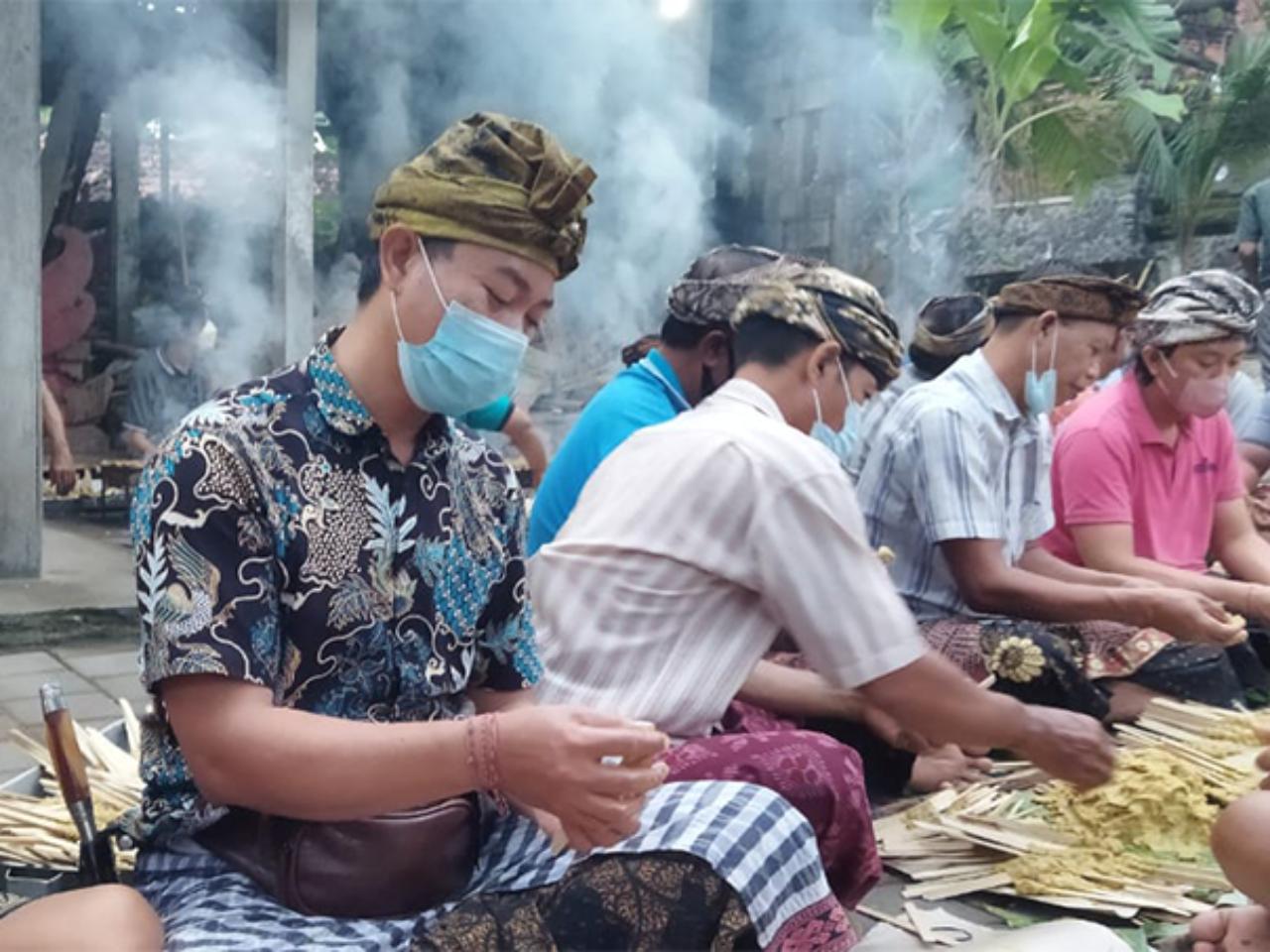
Pawongan, the second element of Tri Hita Karana, focuses on the relationship between humans and other humans. It emphasizes the importance of social harmony, mutual respect, and prioritizes community over individualism. One example of the manifestation of this principle is the strength of social cohesion in each banjar.
Palemahan – emphasises the relationship between humans and the environment or nature. This includes sustainable living practices, such as protecting natural resources, planting trees, and minimizing waste. Humans depend on nature for their survival, yet they have also caused significant harm to the environment through activities such as deforestation, pollution, and climate change. The relationship between humans and nature should be a genuine partnership, where nature provides the resources and services that sustain human life, and humans in return protect and actively preserve the environment for future generations.
The three elements that make up Tri Hita Karana — an entire philosophy of wellbeing rooted in Bali — are simple and yet profoundly complex, as humans are free spirits who must interpret and live out their own role in this harmony of life. Tri Hita Karana is a system of balance that offers guidance and practice in spiritual harmony between humans, nature, and the Gods.


<< If you liked this article, you may also like our other articles >>
To chat with our marketing partner about your business, please contact The Travellist
How Tri Hita Karana Shapes Daily Life in Bali
Understanding Tri Hita Karana is essential for any visitor who wants to engage meaningfully with Balinese culture. Every daily offering placed at a home shrine reflects Parahyangan — the duty to honour the divine. Every cooperative effort during a village ceremony or banjar meeting reflects Pawongan — the strength of community. And every subak irrigation network, every temple garden, and every effort to limit environmental impact reflects Palemahan — care for the natural world. Tri Hita Karana is not a distant philosophy; it is woven into the textures of everyday Balinese life, from the smallest canang sari to the grandest ceremony. For visitors, even a basic awareness of Tri Hita Karana transforms the experience of Bali from sightseeing into genuine and lasting cultural understanding of one of the world’s most spiritually rich places.
Tri Hita Karana was formally recognised in 2012 as part of UNESCO’s inscription of the Cultural Landscape of Bali Province. This formal international acknowledgement elevated the subak system, an ancient agricultural and spiritual institution — the traditional water management network that embodies Palemahan in practice — to World Heritage status. The philosophy continues to guide conversations about sustainable development, responsible tourism, cultural preservation, and long-term ecological sustainability across Bali. For more on Bali’s spiritual traditions, explore our guides to Balinese ceremonies, Bali traditional villages, and Canang Sari. For further reading, see Tri Hita Karana on Wikipedia.