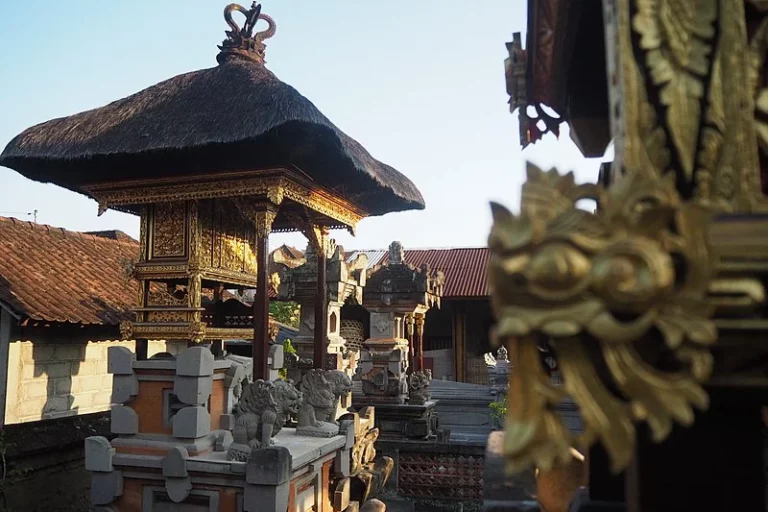
Bali’s rich spiritual culture is reflected in the temples in Balinese homes, as well as the architecture of traditional Balinese homes, which often feature a series of temples and shrines. These sacred spaces are not merely decorative but serve as vital conduits between the spiritual and physical realms. Here, we delve into the significance of temples in Balinese homes and their role in daily life.
Table of Contents
The Pura Keluarga (Family Temple)
The Pura Keluarga is the central temple in a Balinese household, dedicated to ancestral spirits. Families perform offerings and prayers here to honour their ancestors and seek blessings. It represents the enduring bond between Balinese families and their heritage, ensuring that loved ones’s spirits are revered and cared for. The family temple is typically the most elaborate structure in the compound, featuring carved stone gates, tiered towers (meru), and a dedicated prayer pavilion.
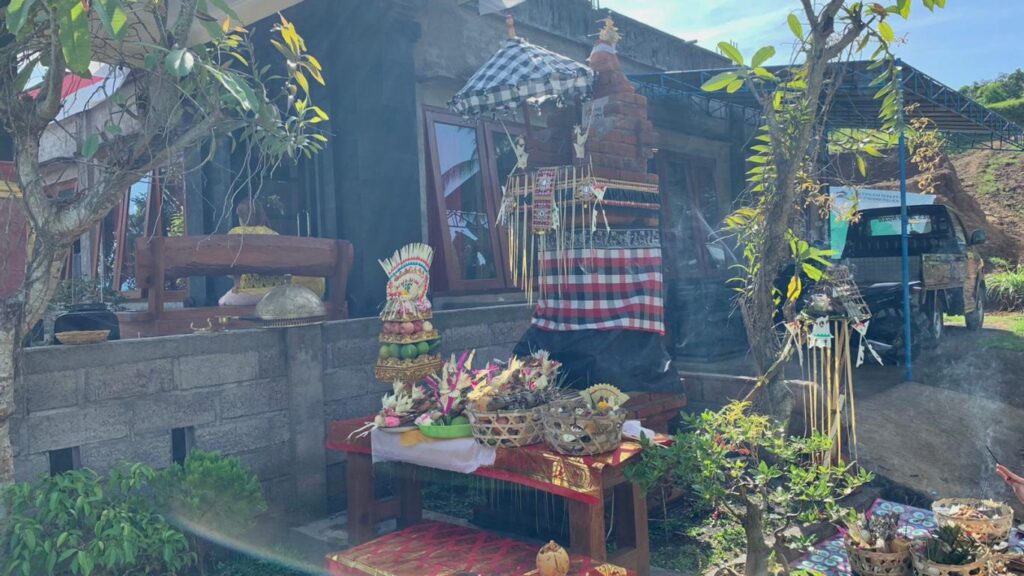
Pelinggih Surya (Sun Shrine)
The Pelinggih Surya is devoted to Surya, the sun god. Facing the sunrise, this shrine symbolises life and vitality. Daily offerings express gratitude for the sun’s energy and its role in sustaining the household’s prosperity.


Pelinggih Penunggun Karang (Guardian Spirit Shrine)
This shrine honours the spirits guarding the land on which the home is built. Placed near the entrance, it protects the property and its residents. Offerings here are believed to promote peace and stability within the household. The shrine’s placement at the entrance also reflects the Balinese belief that welcoming spiritual protection is the first priority of any home.
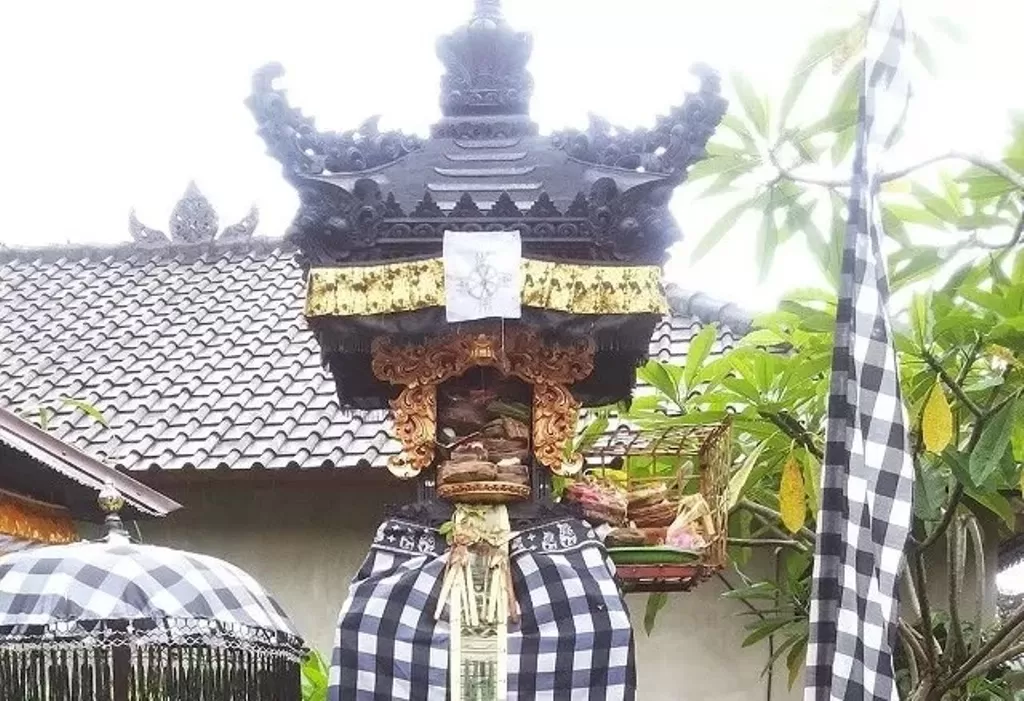
Kemulan Shrine
Dedicated to the supreme deities Brahma, Vishnu, and Shiva, the Kemulan shrine serves as the home’s spiritual axis. Rituals here seek divine protection, guidance, and balance. The Kemulan shrine is also the focal point for major family ceremonies, including tooth-filing rites, marriage blessings, and prayers for newborns.

The Layout and Placement
The arrangement of temples within a Balinese home follows Asta Kosala Kosali, the traditional architectural principles governing temples in Balinese homes, traditional architectural principles. Temples are strategically positioned in the kaja-kangin corner, facing the mountains and sunrise, regarded as the most sacred orientation.
Daily Rituals and Offerings
Daily offerings, or canang sari, maintain harmony between humans, nature, and the divine. These intricate arrangements of flowers, rice, and incense embody mindfulness and gratitude, anchoring spiritual practice in everyday life. The specific flowers and colours used carry symbolic meaning related to the four cardinal directions and their associated deities.
Preserving Culture and Spirituality
Temples in Balinese homes are more than places of worship; they are cultural and spiritual treasures that connect families with the divine and their heritage. They ensure that traditional practices and beliefs endure across generations.
For visitors, understanding these sacred spaces offers profound insights into Bali’s harmonious way of life. Whether admiring their beauty or witnessing rituals, these temples reflect the island’s deeply spiritual essence.
Visiting Temples in Balinese Homes
As a visitor to Bali, you may occasionally be invited to witness rituals at a family temple — an honour that should be approached with genuine respect. Dress modestly, follow your host’s guidance, and remain quiet during prayers. Experiencing temples in Balinese homes firsthand offers a far deeper understanding of Balinese spirituality than any guidebook. For more on Bali’s living culture, explore our guides to Bali traditional villages, the best Bali villa areas, and Bali luxury villas. For further reading on Balinese Hindu architecture, see Balinese architecture on Wikipedia.
<< If you liked this article, you may also like our other articles >>
To chat with our marketing partner about your business, please contact The Travellist The care and devotion visible in every shrine and offering is Bali at its most authentic.