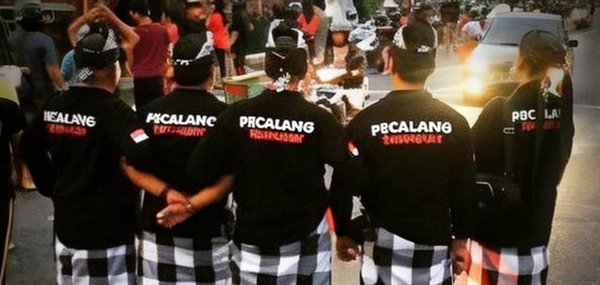
In Bali, tradition and spirituality are woven into every aspect of daily life, and maintaining balance between the sacred and the social is essential. One unique institution that embodies this harmony is the Pecalang, the traditional security force of Bali. Often seen in black-and-white chequered sarongs, headgear, and sashes, They play a vital role in safeguarding cultural ceremonies, ensuring order during festivals, and protecting village life.
Table of Contents
Who Are the Pecalang?
They are community-appointed security officers tasked with maintaining peace and order, particularly during religious and cultural events. Unlike police or military forces, they are not state officials but respected members of their village (banjar) who serve voluntarily.
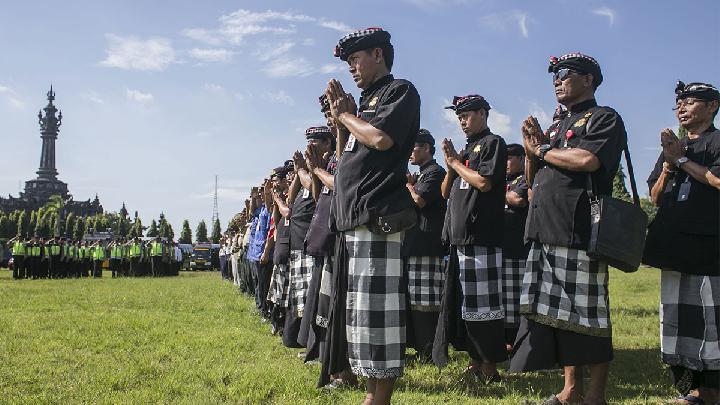
They are instantly recognisable in their poleng cloth (symbolising the balance of good and evil) and their traditional attire, often carrying radios or simple equipment to coordinate their work.
The Role of Pecalang in Balinese Society
1. Guardians of Ceremonies
Pecalang are most visible during Hindu ceremonies such as Nyepi (Balinese New Year), Galungan, Kuningan, and temple anniversaries. They control crowds, guide traffic, and ensure rituals proceed smoothly without disturbance.
2. Community Protectors
Within their villages, these officers assist in maintaining order, from helping during disputes to safeguarding sacred spaces. Their authority is rooted in community trust rather than legal enforcement.
3. Environmental and Tourism Support
In recent years, they have also played roles in supporting local tourism areas, guiding visitors during temple festivals, and even participating in environmental protection, such as beach clean-ups or managing crowds at popular cultural sites.
Pecalang and Nyepi Day
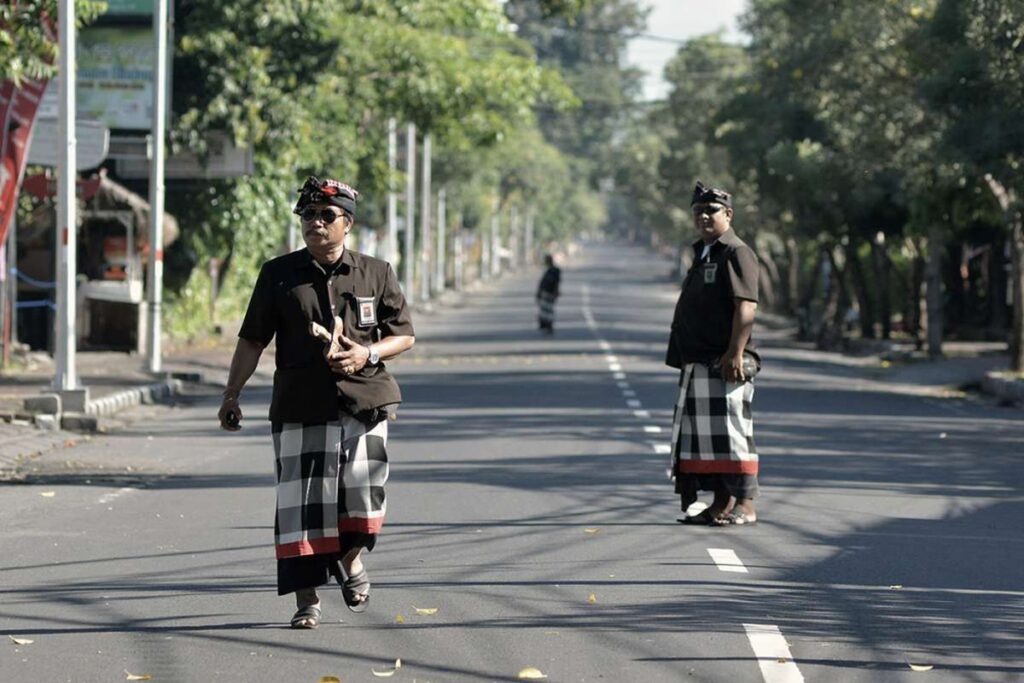
Perhaps the most notable occasion for these guardians is Nyepi, the Balinese Day of Silence. On this day, all activities in Bali come to a halt—no travel, no lights, no work. They are tasked with patrolling the streets to ensure the rules are respected, keeping Bali in complete stillness for 24 hours.
Their presence is key to maintaining the island-wide spiritual practice that marks one of the most unique cultural observances in the world.
The Symbolism of Pecalang
How Pecalang Interact with Visitors
For travellers visiting Bali during major ceremonies or Nyepi, encounters with these traditional officers are part of the cultural experience. They are generally welcoming to respectful visitors, often happy to explain what ceremony is taking place or direct guests to appropriate viewing areas. During Nyepi, however, their role is to ensure absolute silence, and they will politely but firmly ask anyone found outdoors to return inside. Understanding and honouring this role is part of understanding Bali itself.
Their attire is deeply symbolic. The black-and-white chequered poleng cloth represents Rwa Bhineda—the Balinese philosophy of duality and balance (good and evil, light and dark). Their role itself reflects this principle, maintaining harmony between modern life, tourism, and ancient spiritual traditions.
A Living Tradition
What makes this institution unique is that its members are not merely “security guards” but guardians of culture. They embody the values of service, respect, and balance, ensuring that Bali’s traditions remain protected even as the island modernises and welcomes millions of visitors each year.
For locals, these guardians are a source of pride and a symbol of community resilience. For visitors who encounter them at ceremonies or festivals, they offer a human face to Bali’s deepest cultural commitments. Watching them work is to understand that on this island, tradition is not a performance — it is a living, breathing practice upheld by ordinary people who choose to serve; for visitors, they are a living reminder that Bali is more than just a destination—it is a community deeply rooted in spiritual and cultural values. Read our guides to Bali traditional villages and the best Bali villa areas for more on experiencing authentic Balinese culture. For further background on the Pecalang, see Pecalang on Wikipedia.